
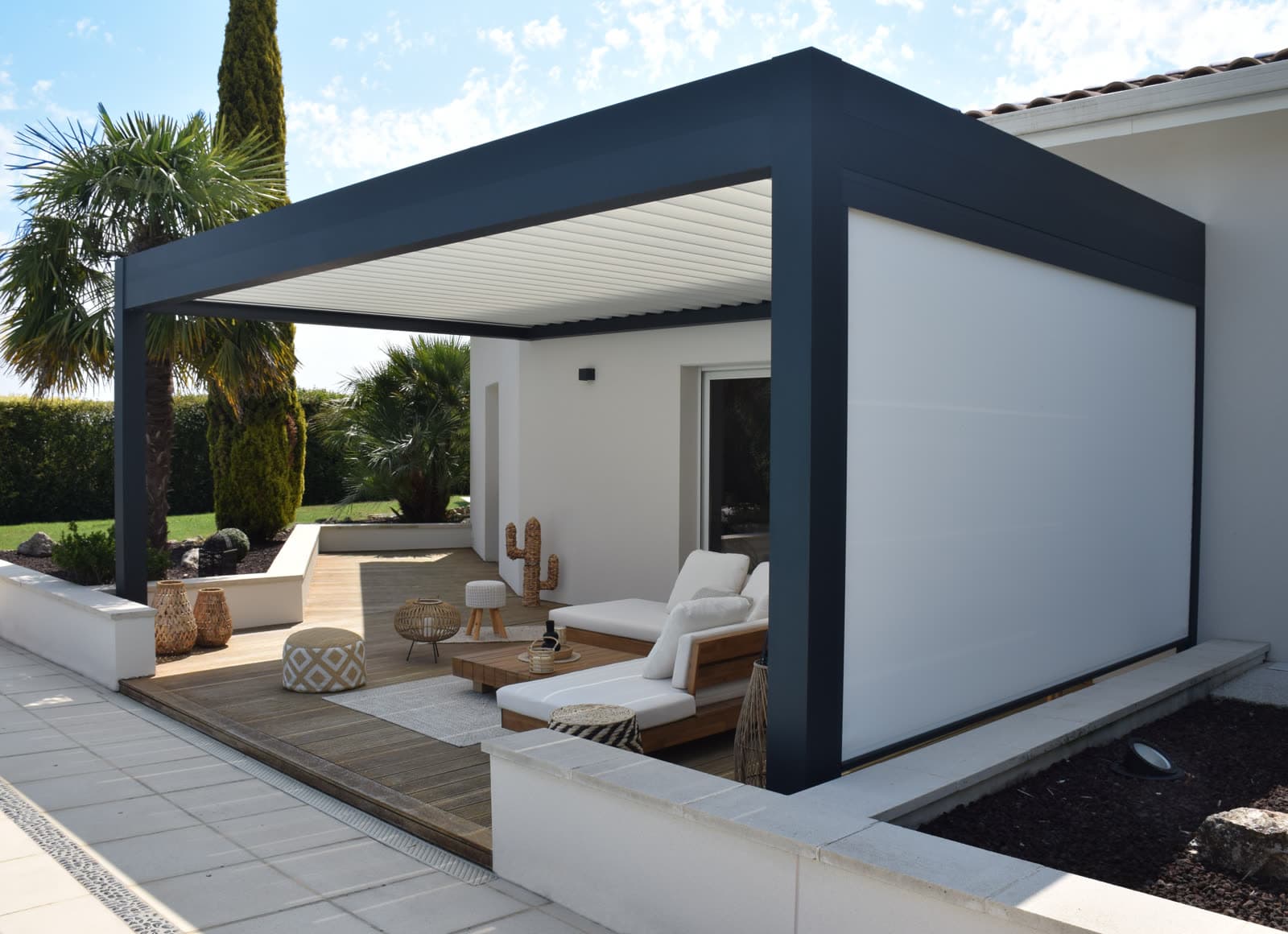
A practical upgrade for patios that are almost there
Algonquin homeowners often already have the bones of a useful outdoor space: a covered porch, a patio under a deck, a louvered pergola, or a backyard dining zone that works on calm nights. The problem is usually the side conditions. Mosquitoes show up near the Fox River. Low sun pushes across a west-facing patio. A neighboring window makes the space feel exposed. Wind moves through an open subdivision lot.
Motorized retractable screens are useful because they solve those side problems without making the space feel permanently enclosed. Drop the screens for dinner, privacy, and glare control. Retract them when the weather is calm and the yard view matters more. For many Algonquin projects, that flexibility is the missing piece between a nice patio and a room the family actually uses.
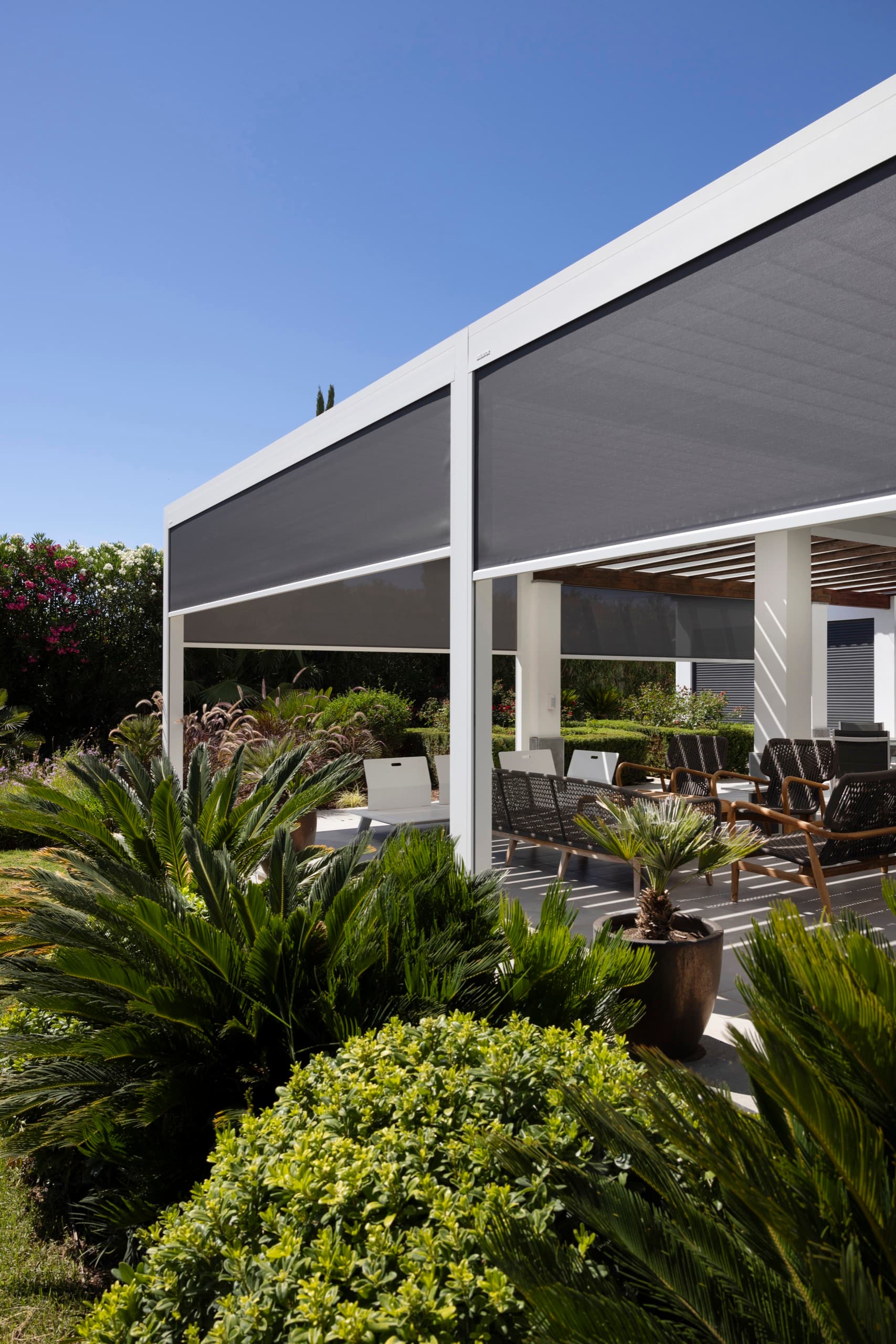
What screens solve on Algonquin patios
Calmer patios near open lots and river air
Algonquin patios near the Fox River, Randall Road subdivisions, and open McHenry County edges can feel exposed when wind moves across the yard. Tracked motorized screens help soften that movement without turning the patio into a permanent enclosure.
Privacy from close side yards
Screens are useful when the outdoor room faces a neighbor, second-story window, or shared fence line. Fabric openness can be selected for a better balance of privacy, daylight, and view.
Low sun and glare control
West-facing patios around Algonquin Commons, High Hill Farms, and newer subdivisions often need help late in the day. Motorized screens can drop for dinner, then disappear when the sun is no longer a problem.
Easy daily use
Remote control, wall switch, app, and smart-home options matter because screens only help if they are simple enough to use every day as bugs, wind, privacy, and sun conditions change.
Screen layouts should follow the actual exposure
The same screen product can solve different problems depending on the lot. We look at which openings matter, whether the screen should prioritize bugs or privacy, and whether the patio also needs overhead shade from a motorized pergola.
Old Town, Main Street, and Fox River patios
River-adjacent patios often need bug control and evening comfort without losing the open-air feel. Screens are a strong fit when the project already has a roof, pergola, porch, or outdoor structure that can support clean tracks.
Randall Road and Algonquin Commons area homes
Newer homes west of town often have larger back patios with direct sun and open sightlines. A screen layout can create a more usable dinner zone without adding a fixed wall that feels heavy from inside the house.
High Hill Farms and Willoughby Farms
Side-yard privacy and low evening sun are common issues in established neighborhoods. The right fabric can make a patio feel calmer while still keeping the yard visually connected.
Lake in the Hills and County Line Road edge
Where Algonquin blends into nearby communities, wind exposure and backyard orientation can vary quickly. We review the exact openings before deciding whether screens alone solve the problem or should be paired with a louvered roof.
Measure the openings before choosing the screen
Screen quality is only one part of the decision. The layout has to fit the actual opening, attachment surfaces, power path, and user routine. A screen that is slightly wrong on width, track placement, or fabric openness can feel frustrating every time it is used.
That is why EDG starts with photos, dimensions, and a simple priority call: bugs, privacy, glare, wind, or seasonal comfort. From there we can tell whether screens alone are a clean first phase or whether the patio should be planned with a pergola, heaters, lighting, or glass.
Opening width, height, and whether each opening is square enough for smooth tracking
Headbox placement, side-track attachment, bottom seal, and how visible the hardware should be
Fabric openness for bug control, privacy, solar comfort, view, and daylight into the home
Electrical path, switch location, remotes, app control, sensors, and future service access
Whether the screens are a retrofit, a pergola add-on, or part of a larger outdoor room plan
Permit or HOA review when screens are tied to a deck, pergola, screen room, or structural change
Permit and structure check
A screen retrofit is not the same as building a new pergola or screen room, but the distinction matters. Algonquin's published pergola checklist and deck handout both point homeowners back to Community Development when a permanent structure, deck, pergola, gazebo, or screen room is involved.
The right first move depends on what the patio is missing
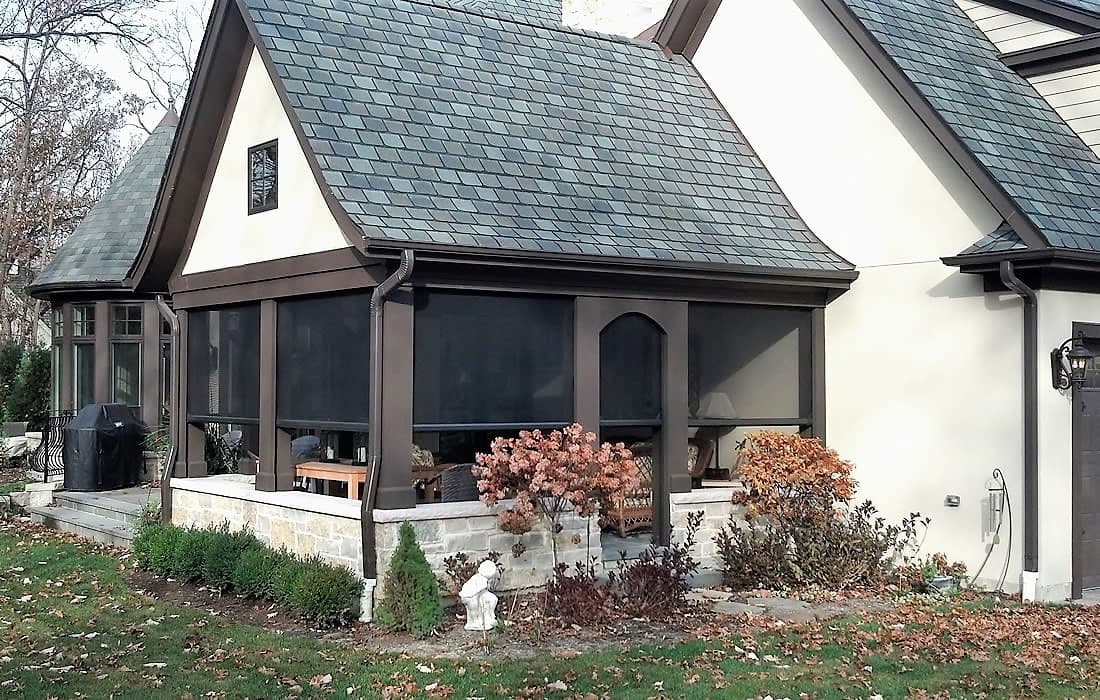
If the patio already has a usable roof or structure, screens can be the fastest way to improve comfort. They are a strong first move when the problem is insects, low sun, visibility from neighbors, or wind through an open side.
If the patio still needs overhead shade, rain control, post layout, drainage, or a cleaner architectural frame, the motorized pergola should usually be planned first. Screens can then be integrated into the pergola openings instead of being forced onto a structure that was not designed for them.
Many Algonquin homeowners end up with both: a louvered roof for overhead control and screens on the sides that matter most. The point is to phase the work intelligently instead of buying isolated parts that do not work together.
Screen systems and fabric behavior
Algonquin screen questions
Are motorized screens a good fit for Algonquin patios?
Yes when the main issues are bugs, glare, privacy, wind, or comfort around an existing patio, porch, pergola, or covered outdoor room. They are especially useful because they retract when the weather is comfortable and deploy only when conditions change.
Can screens be added to an existing pergola or covered patio?
Often they can, but the structure has to be measured carefully. We check the opening width, height, attachment surfaces, headbox location, side-track path, power access, and whether the structure is rigid enough for reliable screen operation.
Do Algonquin screen projects need permits?
A simple screen retrofit may be reviewed differently than a new pergola, deck, or screen room. Algonquin publishes separate guidance for pergolas and decks, and its deck handout notes pier requirements when a pergola, gazebo, or screen room may be added. The safe move is to verify with Community Development before treating the project as permit-free.
Will screens make the patio too dark?
Not if the fabric is selected around the actual problem. We balance openness, fabric color, view, solar control, privacy, and how much daylight should still reach the house.
Should I start with screens or a motorized pergola?
Start with screens if you already have a roof or structure and the problem is side comfort. Start with a motorized pergola if you still need overhead shade, rain management, column layout, and a complete outdoor room foundation.