
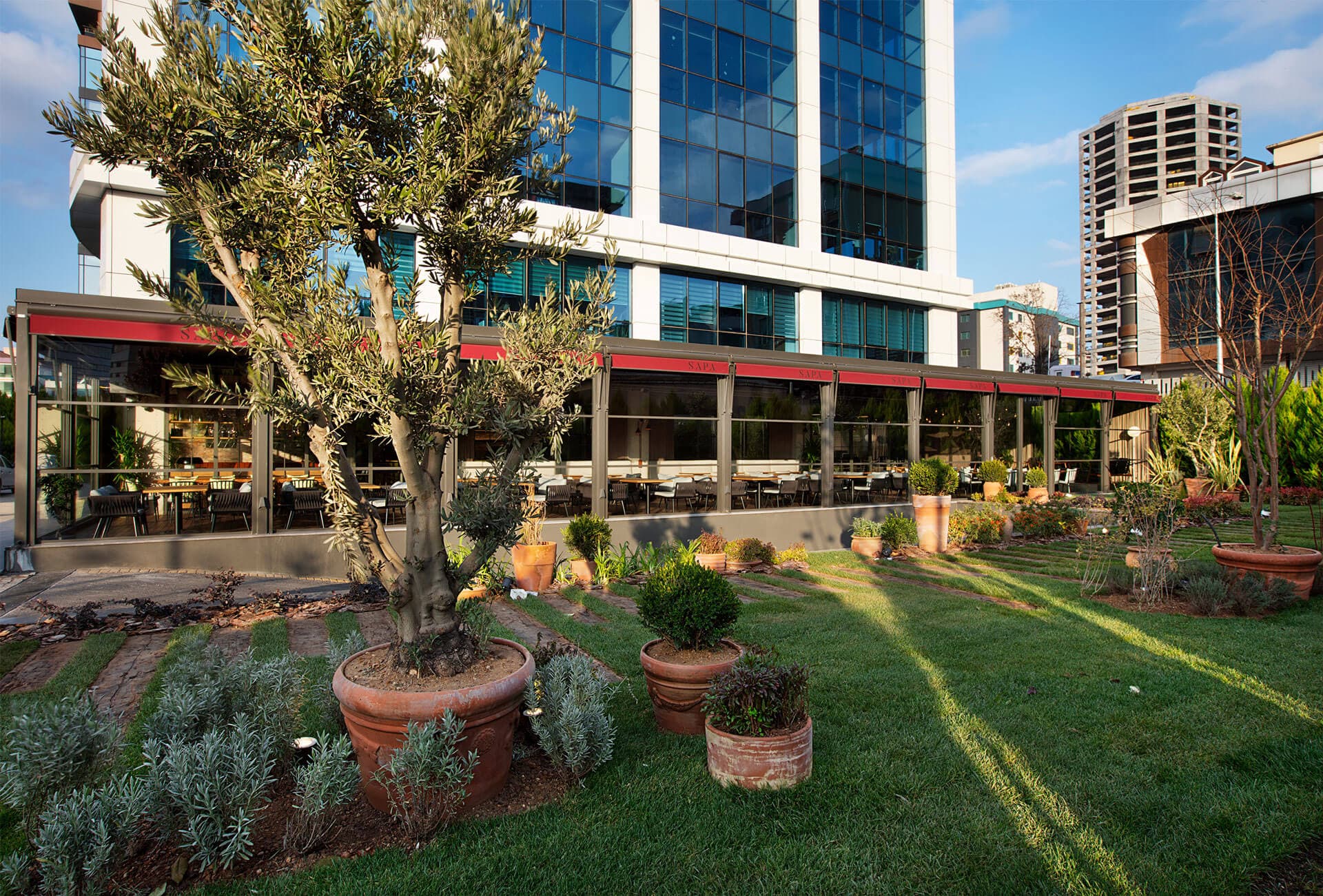
More protection than screens, lighter than a full room addition.
Chicago patios and terraces often fail because of wind before they fail because of temperature. A beautiful outdoor dining area can become uncomfortable fast when gusts move through the space or rain starts pushing sideways. Frameless glass enclosures create a calmer perimeter while keeping the space visually connected to the yard, street, skyline, or garden.
They are especially useful when a project already has overhead structure. A louvered pergola, roof deck cover, or hospitality patio can handle shade and rain overhead, while glass panels protect the sides. When the weather is right, the panels can open so the space still feels like an outdoor room instead of a fixed interior room.
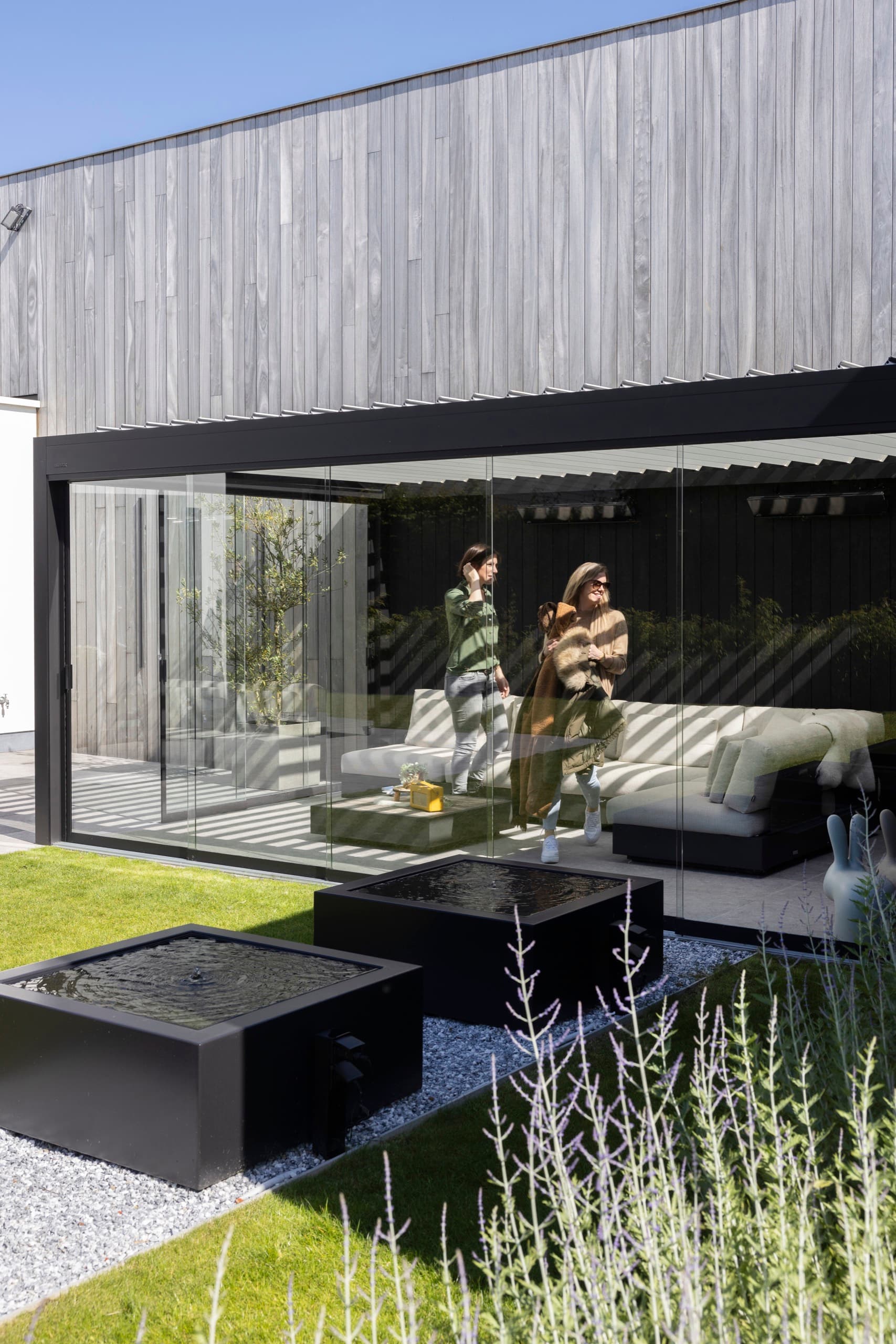
What glass enclosures solve in the city
Wind protection without a boxed-in feel
Glass panels calm exposed patios and terraces while preserving the open view that made the outdoor space valuable in the first place.
Rain control for longer seasonal use
A glass enclosure helps protect furniture, dining areas, and outdoor rooms from sudden Chicago rain without requiring a traditional sunroom addition.
Clear views from inside and outside
Frameless glass keeps sightlines cleaner than framed windows or heavy walls, which matters on city lots and hospitality patios.
Works with pergolas and existing covers
Glass can complete a louvered pergola, covered terrace, or outdoor dining structure when the goal is more season and better weather control.
Where glass fits
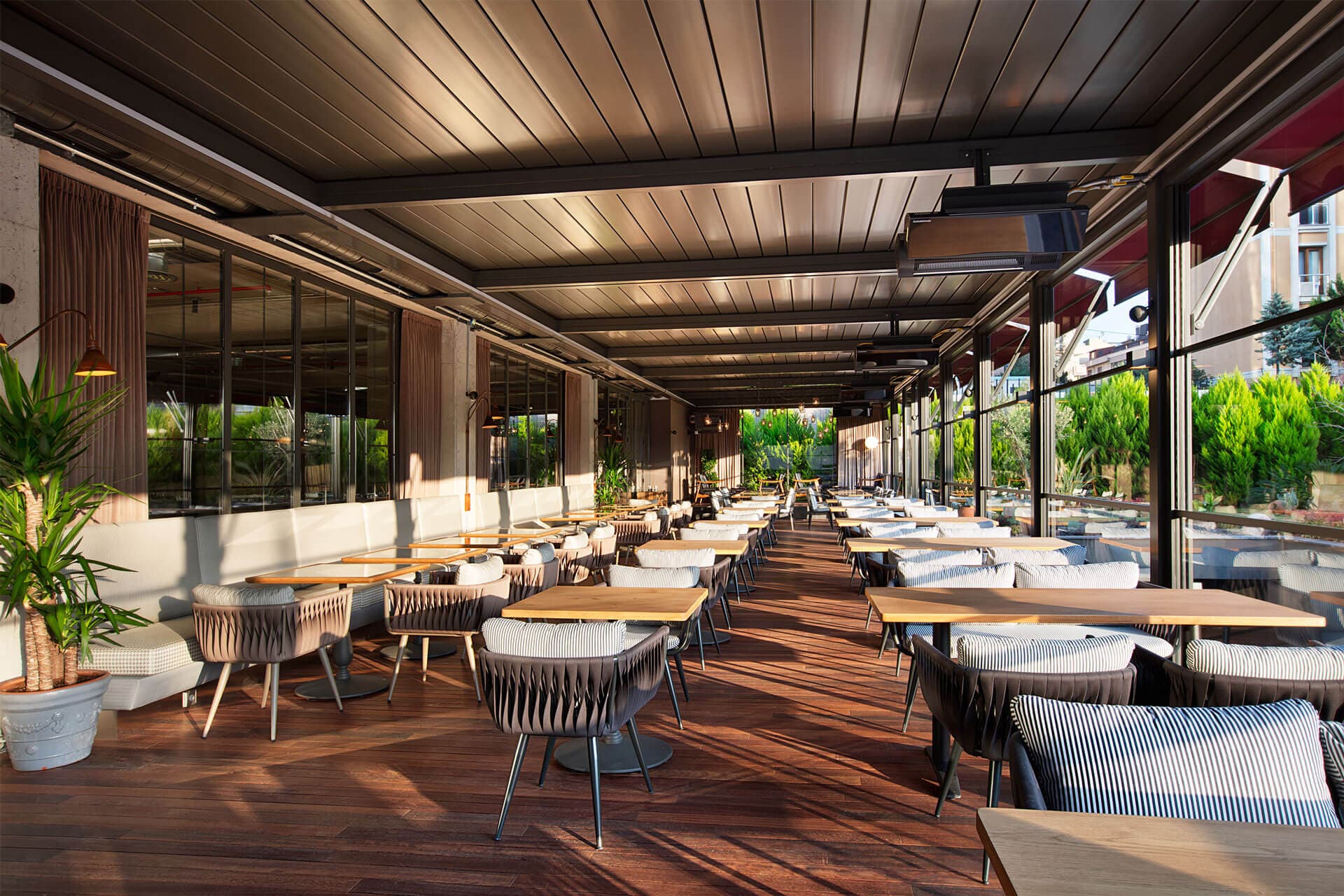
Glass patio enclosures are strongest on projects where the view is part of the value. They fit restaurant patios, roof terraces, garden rooms, covered outdoor kitchens, and pergola projects where the client wants to keep the space visually open while reducing wind and rain exposure.
In Chicago, they also help with shoulder-season use. Spring and fall weather can be good enough to sit outside, but not if wind is cutting across the patio. Glass gives the space a calmer edge without forcing the heavy look of a traditional enclosed addition.
Planning details that matter
Structure and attachment points
Panel stacking location when the space is open
Track style, drainage, and threshold conditions
Wind exposure on roof decks and corner lots
How glass, screens, pergola, lighting, and heat work together
Glass systems for protected outdoor rooms
Chicago glass enclosure questions
Are glass patio enclosures different from sunrooms?
Yes. A sunroom is usually a more permanent room addition. Frameless glass enclosures use sliding or slide-and-turn panels that can open the space when weather is good and close it when wind or rain moves in.
Can glass enclosures work on Chicago roof decks?
Sometimes, but roof deck projects need careful review. We look at structure, attachment, wind exposure, drainage, access, and whether the enclosure should be paired with a pergola or existing cover.
Do glass enclosures help restaurants and hospitality patios?
Yes. They are a strong fit when a patio needs to stay usable through wind, shoulder-season weather, and changing guest comfort needs without sacrificing visibility from the street.
How do I know if glass or screens are better?
Use screens when bugs, privacy, and solar comfort are the main problems. Use glass when wind, rain, and shoulder-season enclosure are the bigger issue. Many projects use both in different parts of the outdoor room.