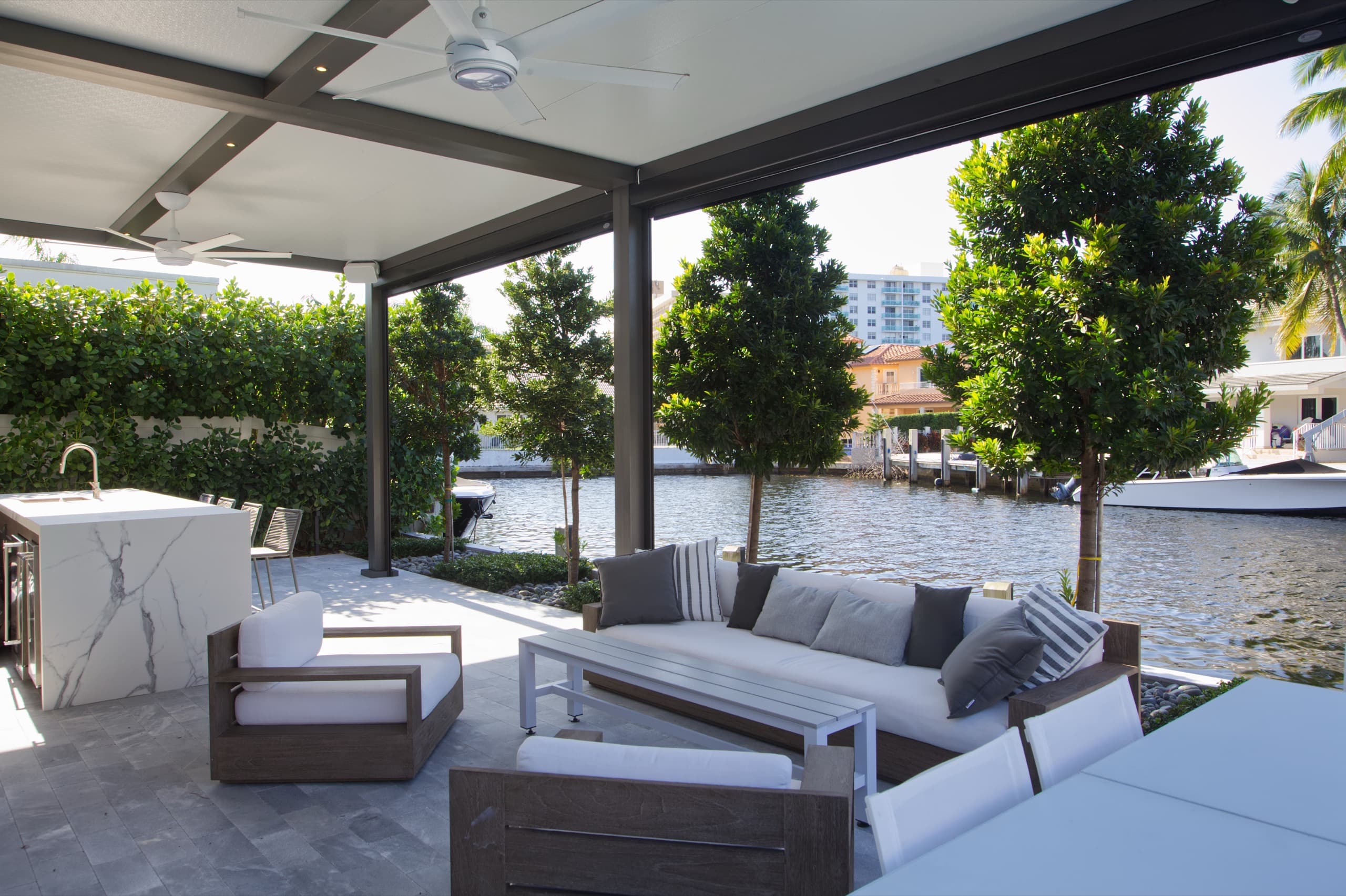
Louvered Pergolas for Sanibel Island
The evolution of outdoor living in Southwest Florida. Motorized louvered roof systems planned around coastal wind documentation, adjustable shade, ventilation, rain protection, and Sanibel permit review.
Engineered for Extreme Coastal Conditions
Every component selected to withstand Sanibel\'s unique challenges: coastal wind exposure, corrosive salt air, and intense subtropical sun.
Wind Documentation
Selected systems can be specified with wind-load engineering, Florida Product Approval, or Miami-Dade NOA documentation where applicable. Final acceptance depends on Sanibel review and the actual installation.
Salt-Air Corrosion Defense
Coastal aluminum, protective finishes, stainless hardware, drainage, and routine cleaning help the system handle Sanibel salt air better than standard inland patio materials.
Intelligent Rain Management
Integrated gutter system channels rainwater through the beam structure when louvers are closed. No exposed downspouts, no waterfall effect—just dry outdoor living even in tropical downpours.
Precision Climate Control
Louvers rotate 0°-150° to track the sun or seal against rain. Open for starlight and seabreezes, angled for afternoon shade, or closed as part of the storm-preparation plan for the selected system.
Louvered Pergolas vs. Traditional Lanais
See why Sanibel homeowners are upgrading from static screen enclosures to intelligent louvered systems.
A louvered pergola is not automatically a lanai replacement
A basic louvered roof does not include insect protection or a fully enclosed room. Retractable screens can be added when the openings, wind documentation, electrical plan, and budget support them. Sanibel determines how the complete project is reviewed; open louvers alone do not settle developed-area, floodplain, drainage, or permit questions.
Intelligent Outdoor Living
Smart features that adapt to Sanibel\'s changing weather—automatically.
Automated Weather Response
Built-in sensors detect rain and high winds, automatically closing louvers to protect your outdoor furniture—even when you are not home. When the weather clears, louvers can reopen automatically.
Precision Temperature Management
Unlike fixed roofs that trap heat, louvered systems vent hot air upward while providing adjustable shade. Stay comfortable outdoors even during Sanibel's peak summer heat.
Integrated Lighting & Climate
LED strip lighting integrated into the beam structure creates ambient evening atmosphere. Infrared heaters can support cooler winter evenings when the layout and electrical plan allow.
Optional Retractable Screens
Deploy motorized screens when you need bug protection or privacy, then retract them when the priority is open air and Gulf views.
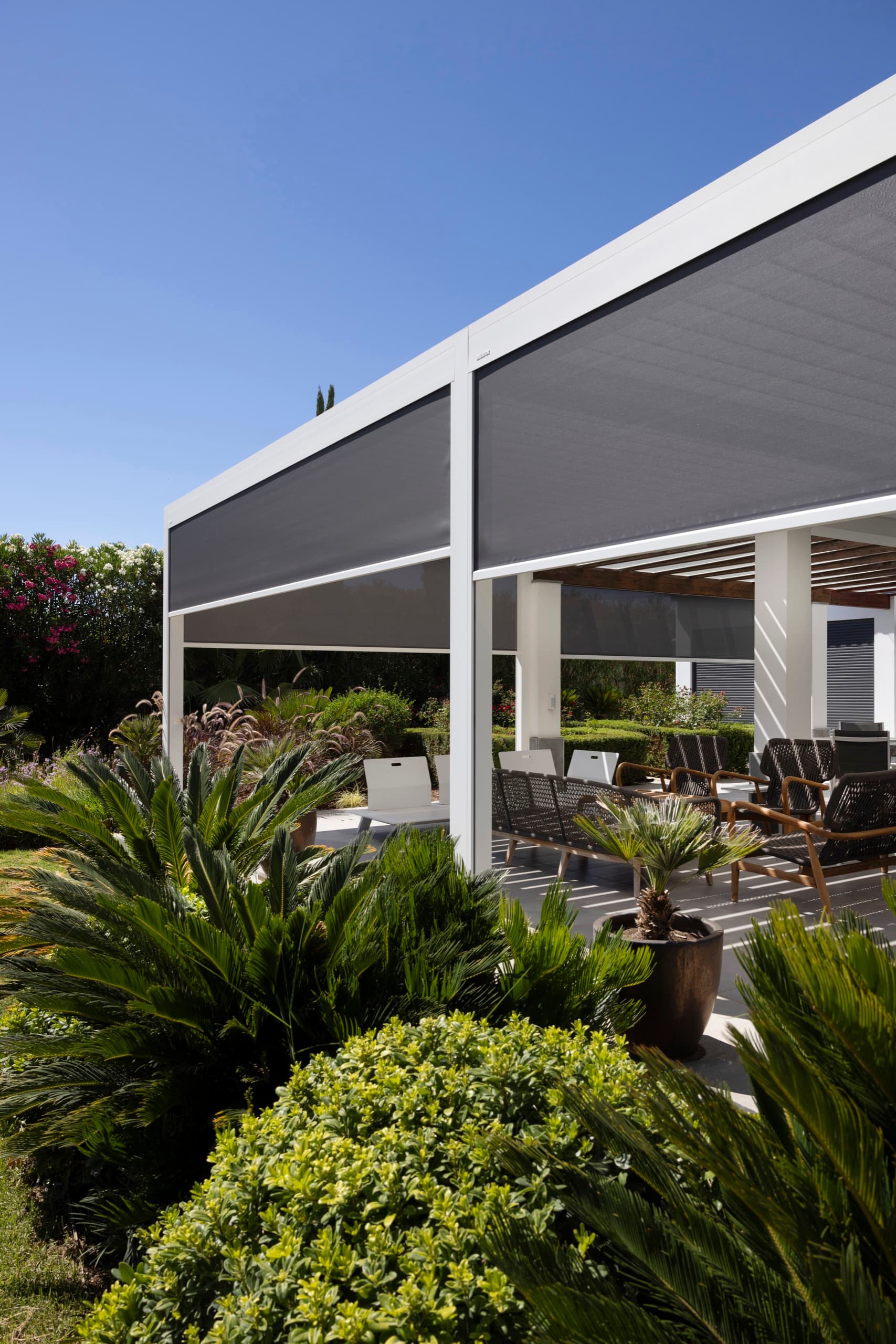
Adaptable Protection for Every Season
Sanibel weather demands flexibility. Open louvers to capture cooling seabreezes during the day. Angle them to block harsh afternoon sun without losing airflow. Close them completely when afternoon storms blow through—or let the automated sensors handle it for you.
Designed for Sanibel Living
From Gulf-front estates to canal homes, see how louvered systems enhance outdoor living throughout the island.
Gulf-Front Estates
West Gulf Drive and East Gulf Drive homes face intense afternoon sun and salt spray. Louvered systems let you control glare while maximizing panoramic water views.
Poolside Living
Fixed screened pool areas can feel hot and static. Open louvers allow ventilation while providing shade, creating a more comfortable poolside experience.
Canal Homes
Properties along the Sanibel River rely on seabreezes for cooling. Adjustable louvers capture crosswinds while blocking harsh afternoon sun.
Post-Hurricane Rebuilds
If storm damage changed the outdoor room, the 50% rule may affect the rebuild path. Use that review point to compare a modern louvered system before automatically rebuilding the same layout.
Investment & Value
Understand the full scope behind coastal outdoor living.
Varies by size, engineering, screens, drainage, and site conditions
Warranty, maintenance, and coastal exclusions depend on the selected system
A clean, documented outdoor room can support a stronger property story
Post-Ian Opportunity: If storm damage changed the outdoor room, the 50% rule may require full reconstruction. This is your chance to compare a better-documented modern system before automatically rebuilding the same layout.
Common Questions About Louvered Systems
Everything you need to know about louvered pergolas for Sanibel Island.
How do louvered pergolas compare to traditional lanais for Sanibel homes?
Traditional lanais are static structures with fixed roofs and screens. Louvered pergolas offer adaptable shade, airflow, and rain protection with motorized louvers. For Sanibel, the real comparison should include wind documentation, anchoring, floodplain review, screens, drainage, and developed-area treatment.
Is a louvered pergola a stronger option than my old lanai?
It can be a stronger and better-documented option, depending on the selected system and installation. EDG compares engineering, product approvals, anchoring, exposure, and Sanibel permit requirements before making that recommendation.
How does the integrated rain management work?
On systems designed for rain management, closed louvers route water through integrated gutters and posts. Performance depends on the selected system, pitch, drainage design, installation, maintenance, and weather conditions. EDG confirms those details for the project.
Can I add screens or other features to a louvered pergola?
Absolutely. Motorized retractable screens can be integrated for bug protection and privacy. LED lighting strips install within the beams for ambient evening illumination. Infrared heaters extend usability into cooler months. These integrate seamlessly without compromising the clean architectural lines.
What is the cost compared to rebuilding a traditional lanai?
Motorized louvered systems are usually a higher-spec option than basic screen enclosure work. The useful comparison is full scope: demolition, slab or footing work, engineering, screens, drainage, electrical, permits, and long-term maintenance.
How long does installation take in Sanibel?
Timeline depends on measurements, engineering, product lead time, Sanibel permit review, HOA review, electrical work, screens, and site prep. EDG must confirm the site conditions before giving a realistic schedule.