
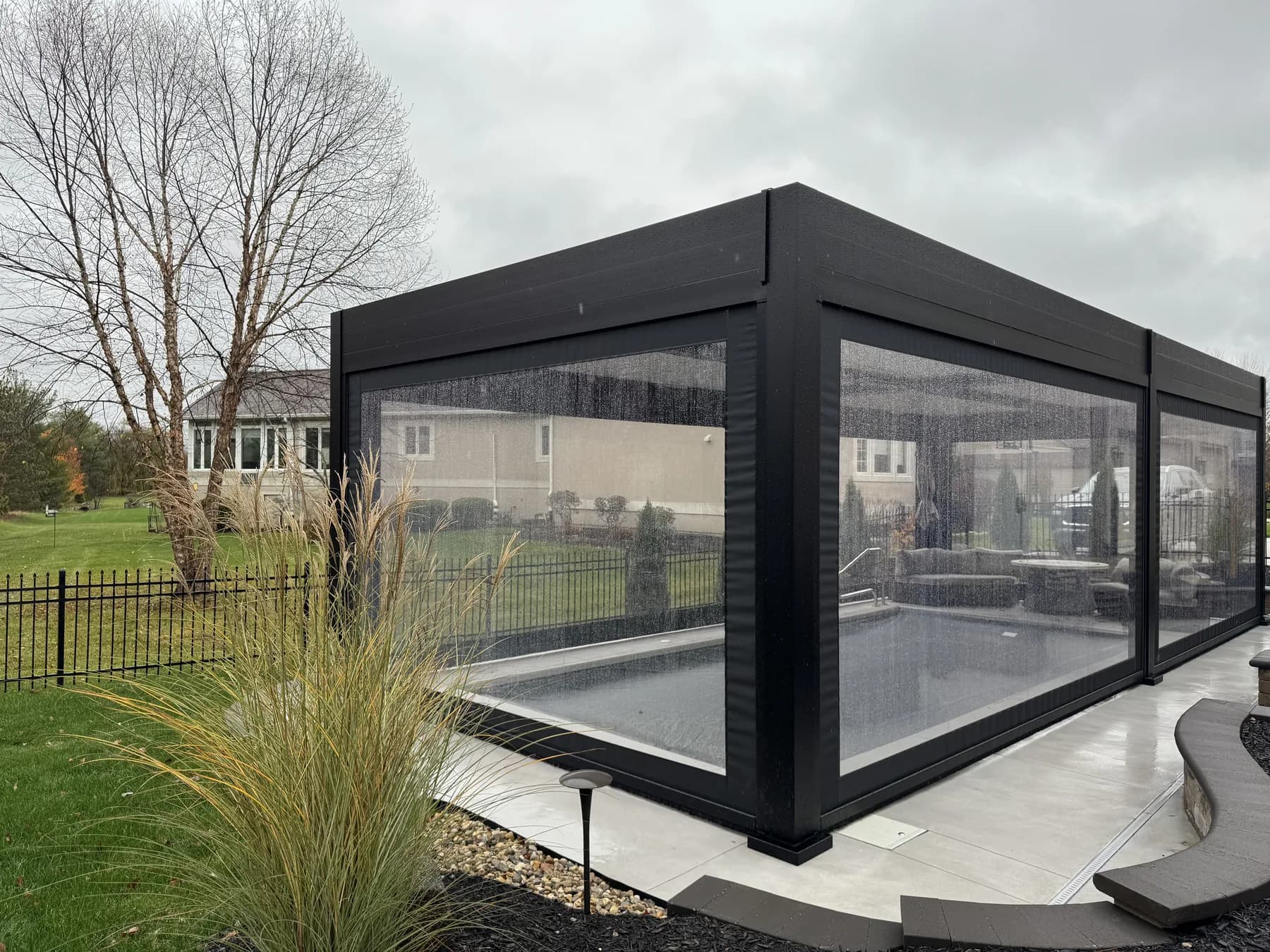
Pergola snow load and winter operation in Midwest weather
EDG plans louvered pergolas around the property, the structure, the drainage, and the way you want to use the room through the seasons. For homeowners in the Chicago–Milwaukee corridor, we can carry that plan through engineering, permitting, installation, and care.
How much snow can a pergola hold?
A pergola can hold the snow load its complete installed configuration is designed for. The selected roof, spans, beams, connections and supports must work together for the site’s snow and wind conditions. EDG coordinates the layout and engineering for the property. Snow depth alone cannot tell you whether the roof is within its design load.
Structural capacity and winter operation answer different questions. A load rating does not mean louvers should remain closed through a snowstorm, or that a frozen roof can safely move. EDG pairs the design with operating guidance for the installed model.
Follow the load from roof to ground
A wider opening can change the louver or beam selection, or call for another bay or support. The connections and foundations need to carry those loads too. EDG coordinates the whole path so the roof fits the property.
- Louvers: the selected profile and distance between supporting beams affect the roof design.
- Beams and connections: bay layout and beam spans determine how loads reach the posts.
- Posts and bases: connections transfer loads into the supporting structure.
- Foundations and soil: footing and ground conditions complete the load path.
Four winter questions we coordinate before installation
Snow is a site condition, not just a roof conversation. EDG brings the property, the structure, and the finished room into the same plan.
Roof layout and structure
EDG coordinates the selected roof, spans, bays, posts, connections, and attachment or foundation approach so the structure fits the property and the intended use.
Exposure and drifting
An open yard, lakefront setting, roof edge, or nearby taller roof can change the way snow reaches the structure. EDG accounts for the site around the footprint.
Drainage through freeze and thaw
Gutters, downspouts, patio grade, doors, stairs, and finished surfaces need a usable discharge path before winter weather arrives.
Local approvals and handoff
EDG coordinates the design, engineering, permitting, installation, and operating information needed to move from a concept to a usable outdoor room.
Know what to do when the weather changes
EDG gives local homeowners a practical operating handoff so the roof is not being figured out for the first time during a storm.
Before freezing weather
Clear debris from gutters and outlets. While the roof moves freely, set the winter position supplied for your installed model. EDG explains how its sensors and power controls fit that procedure; contact us before changing their settings.
When the roof is already frozen
Leave frozen or snow-blocked louvers in place. Do not force the motor or repeatedly jog the controls to reach the winter position. Follow the installed system’s thaw and restart procedure; call EDG if conditions are unclear.
During thaw and before restart
Check that meltwater has a clear outlet away from doors, stairs and walking routes. Wait until ice and obstructions have cleared before operating. If alignment, movement or sound is unusual, stop and contact EDG for service.
You do not need a finished plan to talk with EDG
A first conversation can start with the basics. Photos, measured dimensions, and a complete drawing set can come later if the project needs them.
Ready to plan a winter-ready outdoor room?
Tell EDG where the project is and what you want the space to do. We can talk through your layout, site, and options.
How much snow can a pergola hold?
A pergola can hold the snow load its complete installed configuration is designed for. The selected roof, spans, beams, connections and supports must work together for the site’s snow and wind conditions. Snow depth alone cannot tell you whether the roof is within its design load. EDG coordinates the layout and engineering for the property.
How should I position the louvers for snow?
Use the winter position supplied for your installed model while the roof is still free to move, before freezing or snow arrives. EDG explains the louver position, sensor behavior and power procedure at handoff. A structural snow rating does not replace those operating instructions.
Can I operate a pergola when the louvers are frozen?
No. Leave a frozen or snow-blocked roof in place; do not force or repeatedly jog it. Follow the installed system’s thaw and restart instructions, and contact EDG if you are unsure whether it is clear to move.
What should I send for an initial winter pergola inquiry?
Start with your contact information, project location or area, and what you want the space to do. Photos and measured dimensions are optional at this stage, but helpful when available. EDG can help shape the next steps from a simple first conversation.